51 books
-
1. The Secret Agent A Simple Tale

The Secret Agent by Joseph Conrad. In the only novel Conrad set in London, The Secret Agent communicates a profoundly ironic view of human affairs. The story is woven around an attack on the Greenwich Observatory in 1894 masterminded by Verloc, a Russian spy working for the police, and ostensibly a member of an anarchist group in Soho. His masters instruct him to discredit the anarchists in a humiliating fashion, and when his evil plan goes horribly awry, Verloc must deal with the repercussions of his actions. While rooted in the Edwardian period, Conrad's tale remains strikingly contemporary, with its depiction of Londoners gripped by fear of the terrorists living in their midst.
-
2. Romance
(1903) A collaboration with F.M. Hueffer. TO ELSIE AND JESSIE "C'est toi qui dors dans Vombre, O sacr Souvenir." If we could have remembrance now And see, as in the days to come We shall, what's venturous in these hours: The swift, intangible romance of fields at home, The gleams of sun, the showers, Our workaday contentments, or our powers To fare still forward through the uncharted haze Of present days. . . . For, looking back when years shall flow Upon this olden day that's now, We'll see, romantic in dimm'd hours, These memories of ours.
-
3. The Secret Agent
(1907) ~ In the only novel Conrad set in London, The Secret Agent communicates a profoundly ironic view of human affairs. The story is woven around an attack on the Greenwich Observatory in 1894 masterminded by Verlac, a Russian spy working for the police, and ostensibly a member of an anarchist group in Soho. His masters instruct him to discredit the anarchists in a humiliating fashion, and when his evil plan goes horribly awry, Verlac must deal with the repercussions of his actions. ~ Mr Verloc, going out in the morning, left his shop nominally in charge of his brother-in-law. It could be done, because there was very little business at any time, and practically none at all before the evening. Mr Verloc cared but little about his ostensible business. And, moreover, his wife was in charge of his brother-in-law. The shop was small, and so was the house. It was one of those grimy brick houses which existed in large quantities before the era of reconstruction dawned upon London. The shop was a square box of a place, with the front glazed in small panes. In the daytime the door remained closed; in the evening it stood discreetly but suspiciously ajar.--Submitted by Anonymous ~
-
4. The Secret Agent: A Simple Tale

The Secret Agent: A Simple Tale is a novel by Joseph Conrad published in 1907.The story is set in London in 1886 and deals largely with the life of Mr. Verloc and his job as a spy.The Secret Agent is also notable as it is one of Conrad's later political novels, which move away from his typical tales of seafaring. The novel follows the life of Mr. Verloc, a secret agent, deals broadly with the notions of anarchism, espionage, and terrorism. It portrays anarchist or revolutionary groups before many of the social uprisings of the twentieth century. However, it also deals with exploitation, particularly with regard to Verloc's relationship with his brother-in-law Stevie.Because of its terrorist theme, The Secret Agent was noted as "one of the three works of literature most cited in the American media" around two weeks after September 11, 2001. The Secret Agent was ranked the 46th best novel of the 20th century by Modern Library.
-
5. Heart of Darkness

“The horror! The horror!” Heart of Darkness is a complex exploration of the attitudes people hold on what constitutes a barbarian versus a civilized society and the attitudes on colonialism and racism that were part and parcel of European imperialism. In 1998, the Modern Library ranked Heart of Darkness as the sixty-seventh of the hundred best novels in English of the twentieth century.
-
6. Nostromo
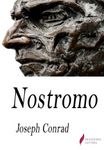
Nostromo: A Tale of the Seaboard is a 1904 novel by Joseph Conrad, set in the fictitious South American republic of "Costaguana". It was originally published serially in two volumes of T.P."s Weekly. In 1998, the Modern Library ranked Nostromo 47th on its list of the 100 best English-language novels of the 20th century. It is frequently regarded as amongst the best of Conrad"s long fiction; F. Scott Fitzgerald once said, "I"d rather have written Nostromo than any other novel." Conrad set his novel in the town of Sulaco, an imaginary port in the western region of the imaginary country Costaguana. In his "Author’s Note" to later editions of Nostromo, Joseph Conrad provides a detailed explanation of the inspirational origins of his novel. There he relates how, as a young man of about seventeen, while serving aboard a ship in the Gulf of Mexico, he heard the story of a man who had stolen, single-handedly, "a whole lighter-full of silver". As Conrad goes on to relate, he forgot about the story until some twenty-five years later when he came across a travelogue in a used-book shop in which the author related how he worked for years aboard a schooner whose master claimed to be that very thief who had stolen the silver. Joseph Conrad (born Józef Teodor Konrad Korzeniowski, Polish) 3 December 1857 – 3 August 1924 was a Polish-British writer regarded as one of the greatest novelists to write in the English language. Though he did not speak English fluently until his twenties, he was a master prose stylist who brought a non-English sensibility into English literature. Conrad wrote stories and novels, many with a nautical setting, that depict trials of the human spirit in the midst of what he saw as an impassive, inscrutable universe.
-
7. The End of the Tether
(1902)
-
8. Lord Jim
Un jeune officier de marine, le lieutenant Jim, embarque comme second à bord d'un vieux cargo «bon pour la ferraille», le Patna, pour convoyer un groupe de pèlerins vers La Mecque. Dans le brouillard, le Patna heurte une épave. En inspectant la coque, Jim découvre un début de voie d'eau. Pris par la peur, Le capitaine et Jim abandonnent le navire et ses passagers. Mais le Patna ne coule pas... L'attitude de Jim a déclenché un scandale et il est radié à vie. Rongé par le remords, lui qui ne rêvait que de gloire et d'honneur, erre dans les ports, acceptant les travaux les plus humiliants. Une seconde chance lui est cependant offerte par le négociant Stein qui lui confie une mission en Malaisie...
-
9. Nostromo
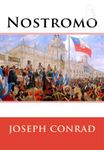
Widely considered one of the greatest novels of the twentieth century, Joseph Conrad’s Nostromo is an immensely exciting tale of love, revolution, and politics set in the mythical South American country of Costaguana during the 1890s.
-
10. Heart of Darkness

"Heart of Darkness" is a novella by Joseph Conrad. It was originally published as a three-part story in Blackwood’s Magazine in 1899 before being collected into a book in 1902. The novel is primarily narrated by Charlie Marlow, a uniquely wise and talkative seaman, as he recounts his experiences as a steamship captain on expedition through the expanses of the Congo River basin. Enthralled by the opportunity to explore the wilds of this huge, winding river, Marlow signs on with a French trading company that claims several stations along the Congo from which they export ivory. Many of the people he meets along the way, like the ivory trader Kurtz, serve as a reminder of the consequences of human greed and suffering since so many are enticed by the opportunity for wealth, even at the expense of themselves and others. Over the course of his journey, he also learns that Europeans may not be as civilised and advanced as they would like to think.Ever since its publication in the early 20th century, Joseph Conrad's semi-autobiographical ''Heart of Darkness'' has been both praised and criticised, but it is still recognised as one of the most influential and eye opening works of modern English literature.
-
11. Jeunesse - Le Coeur des ténèbres
Le recueil se compose de deux récits, qui partagent deux traits communs. L"un est une même technique de narration: un narrateur non identifié rapporte les dires d"un autres narrateur, on a un récit dans le récit. L"autre est que le narrateur identifié est le même: un vieux marin, nommé Charles Marlowe, qui est plus ou moins un double de Conrad lui-même. Dans le premier récit, Marlowe, jeune, vient de prendre son premier poste d"officier sur un cargo chargé de quelques centaines de tonnes de charbon à destination de Bangkok. Le navire connaît toutes les mésaventures possibles, voie d"eau, tempête épouvantable qui lui cause de graves avaries, et entraînent un retard de plusieurs mois de son départ. Enfin, après avoir appareillé pour de bon, on découvre au milieu de l"Océan Indien, que la cargaison a pris feu spontanément... Le deuxième récit, qui donne son titre au recueil, voit un Charles Marlowe, vieux commandant pratiquement à la retraite, s"ennuyer. Il accepte de commander un bateau de rivière, chargé de remonter un grand fleuve. Aucun nom n"est donné, mais il ne fait pas de doute qu"il s"agit du Congo, dans ce qui sera le Congo belge. Il est chargé d"aller chercher un personnage étrange, nommé Kurtz, qui commande un poste commercial qui lui sert à razzier de l"ivoire. D"autres européens sont passagers sur le bateau, dont le directeur local de l"entreprise. Tous reconnaissent à Kurtz un charisme hors du commun. Celui-ci, malade, doit être relevé mais refuse de l"accepter...
-
12. Heart of Darkness
In this symbolic story we follow Charles Marlow as he recounts his adventure to a group of men aboard a ship anchored in the Thames Estuary from dusk through to late night. The passage of time and the darkening sky during Marlow's narrative parallels the atmosphere of the events he narrates.
-
13. The End of the Tether
The End of the Tether by Joseph Conrad. The End of the Tether by Joseph Conrad is a somber, mature and beautifully crafted novella published in 1902. The End of the Tether is about an old ship's captain who has since retired on his savings but a banking crisis has left him penniless. It is not so much that he doesn't have any money any more (though that still is a bit of a problem), but rather than he wanted to pass some money down to his daughter so that she might not live in want. In fact there is a whole story about his daughter, but then again this particular book is incredibly complex with the various threads weaving through it. The End of the Tether by Joseph Conrad demonstrates again his mastery of prose fiction forms. In this case Conrad has written a novella about a sea captain named Whalley who has had a financial disaster at the end of a distinguished career. Conrad offers a fascinating story resting upon the shoulders of his meticulously developed characters. Ranked by critics and literary experts as one of the most important English writers, Joseph Conrad contributed to the Western canon with such masterpieces as Heart of Darkness and Lord Jim. A master of intricate psychological portraiture, Conrad brings this skill to bear in "The End of the Tether," a story about an elderly man's attempt to come to grips with his own mortality.
-
14. The Rover
The Rover by Joseph Conrad. Peyrol is a Master-Gunner French Republican Navy and a pirate. He longs to escape his violent life and settle down on a farm far away from the ocean and the violence he has known all his life. This struggle for freedom and peace plays out against the backdrop of the French Revolution and Napoleon’s rise to power. Peyrol must fight for redemption and dignity on this his final voyage. The Rover is the last completed novel by Joseph Conrad, written between 1921 and 1922.
-
15. Typhoon
Typhoon by Joseph Conrad. Typhoon is a classic sea story, possibly based upon Conrad's actual experience of seaman's life, and probably on a real incident aboard of the real steamer John P. Best. It describes how Captain MacWhirr sails the Siamese steamer Nan-Shan into a typhoon—a mature tropical cyclone of the northwestern part of the Pacific Ocean. Other characters include the young Jukes - most probably an "alter ego" of Conrad from the time he had sailed under captain John McWhir - and Solomon Rout, the chief engineer. The novel classically evokes the seafaring life at the turn of the century. While Macwhirr, who, according to Conrad, "never walked on this Earth" - is emotionally estranged from his family and crew, and though he refuses to consider an alternate course to skirt the typhoon, his indomitable will in the face of a superior natural force elicits grudging admiration.
-
16. Heart of Darkness

Aboard the Nellie, anchored in the River Thames near Gravesend, Charles Marlow tells fellow sailors how he became captain of a river steamboat for an ivory trading company. As a child, Marlow was fascinated by "the blank spaces" on maps, particularly Africa. The image of a river on the map particularly fascinated Marlow.
-
17. Sous les Yeux de l'Occident

Un étudiant russe trouve un soir chez lui, caché, l'assassin d'un ministre de la répression tsariste survenue des heures plus tôt. Ce dernier lui demande de l'aider à fuir. Notre héros accepte, mais finit par le dénoncer à la police. Il se trouve alors pris dans un engrenage et est engagé pour espionner des révolutionnaires actifs à l'étranger, et notamment en Suisse...
-
18. Lord Jim
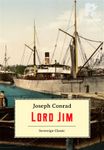
Jim, a young British seaman, joins his captain and other crew members in abandoning their sinking ship full of passengers. A few days later, they are picked up, and the passengers are later also saved. The reprehensible actions of the crew are exposed. The other participants evade the judicial court of inquiry, leaving Jim to the court alone.
-
19. The Shadow Line
A Confession. (1917) "Worthy of my undying regard" To Borys And All Others Who, Like Himself, Have Crossed In Early Youth The Shadow Line Of Their Generation With Love
-
20. Heart of Darkness
Heart of Darkness is a journey to the dark soul of mankind. In creating this fiction Conrad uses the technique of the Iliad. He also uses the technique which we find in The Rhyme of the Ancient Mariner where the narrator has to keep repeating his story in an effort to cleanse the memory. Christian symbolism is rampant as Conrad shows us the pilgrims, the spear through the side of his helmsman, the episode with his shoes redolent of Jesus telling his disciples to shake off the dust from their sandals. The novella overall has a Nietzschian quality as the colonists strive to achieve their goals through a will to power over the indigent people of Africa. The women in the novella are reminiscent of the Madonna/ w***e complex. By the end of the narrative we are almost ready to start again hoping for a different outcome.--Submitted by Tom Keane Conrad never tells us where Heart of Darkness is set. It begins on a boat moored on the Thames, with the glow of the City in the background, waiting for the tide to turn. Marlow, the narrator, tells of his boyhood yearning to visit the empty places of the world, and goes on to reminisce about his short time as a river-boat captain, on an endless river, in a dark continent, in the service of a European financial power. He never gives a more exact location than this, for the heart of darkness is an imaginative location, a place that may be anywhere, a dark violence that has no boundaries, with a starting point that is as likely to be the City glowing behind the narrator, as anywhere else.--Submitted by Anonymous Heart of Darkness can be seen in some angles as an autobiographical novel by Conrad. The party dealing properly with the title begins when Marlow, on board with his friends on the Thames, takes his turn to tell a history to help them shorten mentally their trip. Marlow grows from a casual critic as the story in which he's implicated begins to an other person for his sound judgment is influenced by the harsh conditions he lived during his trip to rescue Kurtz. He even reaches a point where he loses his philanthropic character by judging severely the people who have not endured what he endured in Africa.--Submitted by Sawadogo Salfo
